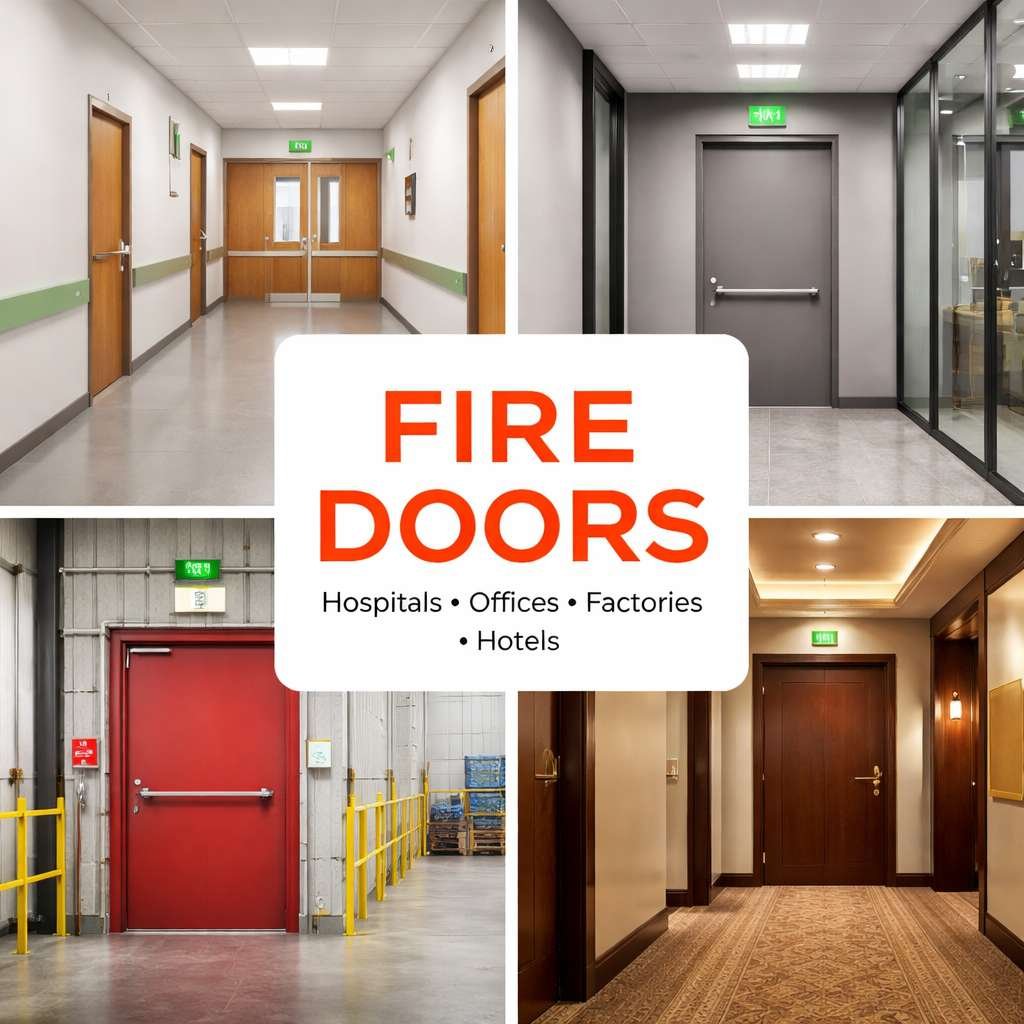
Fire Exit and Emergency Exit Doors
An exit door has two jobs that pull against each other: it must hold fire back, and it must open instantly under a crowd pushing towards it. A fire exit door that is locked, that opens against the direction of escape, or that has a stiff closer defeating single-handed operation, is a hazard rather than a safeguard.
Fire rated steel exit doors
Our fire rated steel doors are manufactured to IS 3614 under a BIS licence, in FD60 and FD120 ratings, with galvanised and powder-coated finishes for external staircases exposed to weather.
Panic and emergency exit hardware
- Push-bar and touch-bar panic exit devices for assembly and public occupancies.
- Emergency exit push pads for rooms occupied by people familiar with the building.
- Door closers with adjustable closing and latching speed so the door self-latches every time.
- Electromagnetic hold-open devices released by the fire alarm panel, for doors on busy circulation routes.
Direction of opening and travel distance
Escape doors serving more than a small occupant load must open in the direction of travel. Placement is governed by the travel-distance limits in NBC 2016 Part IV, which vary with occupancy and whether the building is sprinklered. We check the door schedule against those limits before manufacture, not after installation.
Signage and visibility
Every exit door is supplied with photoluminescent exit marking so the escape route remains legible when the power and the lighting have gone.